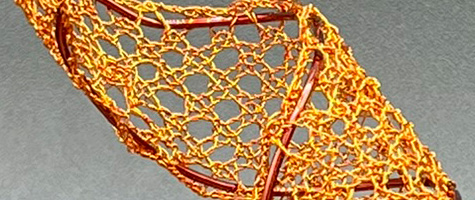
After making Suspended Noise, I wanted to know if I could use the same basic idea to create a much smaller sculpture with fine wire. Suspended Noise was made with an XL strip of bobbin lace worked in speaker wire and shaped using bent aluminum pipes to support a sculptural design. For this test, I wanted to see how the concept would translate to a much smaller scale.
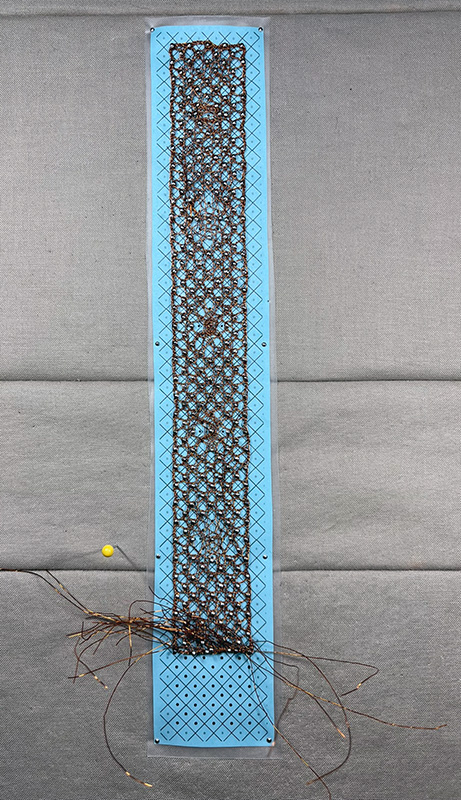
I made a long, narrow strip of Flanders lace using 30-gauge coated copper wire. The pattern included spiders and Flanders peas. I worked the lace normally on the pillow using bobbins set up for wire. I had some problems with the wire breaking in the beginning, but as I gained experience working with it, my movements became smoother and the wire broke less often.
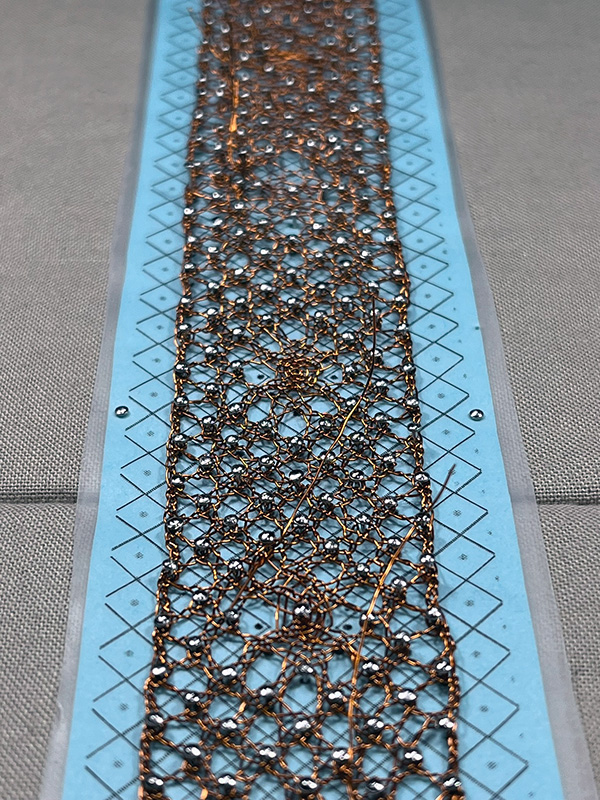
Once the lace was finished, I worked 18-gauge coated copper wire through the holes along the plaited edges to provide support. My husband made a tapered wooden dowel that I used while bending the lace. This gave me something to shape the wire around to create smooth curves.
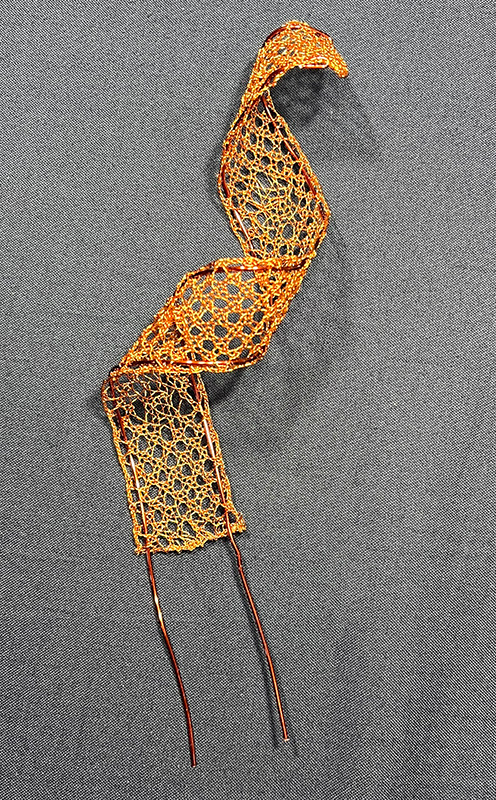
I had a general idea of the form I wanted, but mostly let the wire do what it wanted. Wire usually works like that. The resulting sculpture twists upward, with the heavier wire supporting the curves of the much finer bobbin lace.
My husband also made a wooden base specifically for the sculpture. The heavier support wires fit through holes in the base and are bent underneath to hold the sculpture securely in place.
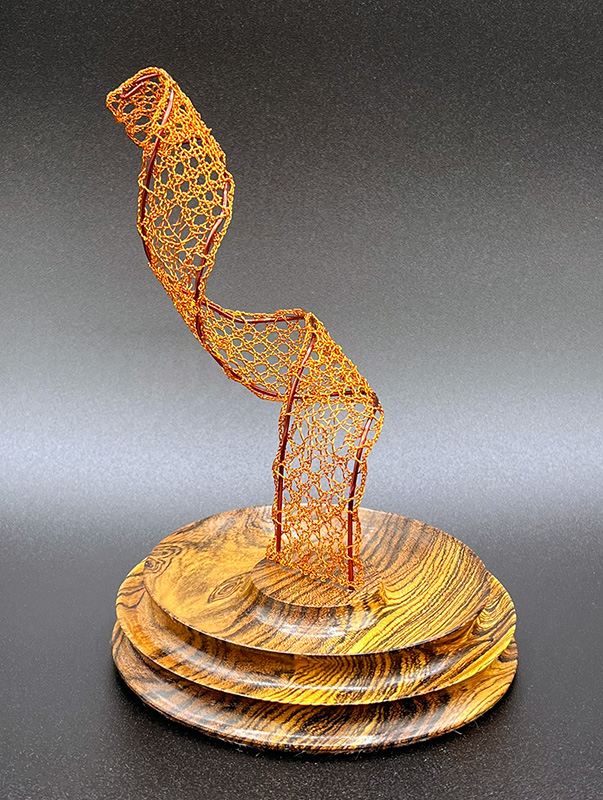
Overall, the experiment was a success. I was pleased with how well the fine wire worked for bobbin lace and how easily the finished lace could be curved into a 3D form.
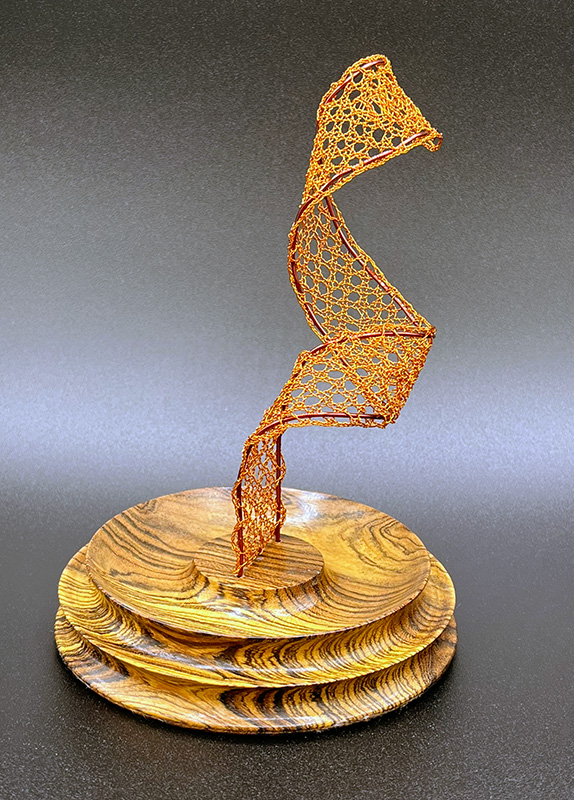
The one thing I wasn’t pleased with was the color of the wire. I ordered two gauges of the same coated copper wire but received noticeably different colors. After talking with the company, I learned that color consistency isn’t important for the wire’s intended industrial use. The coating color doesn’t signify anything, so shade variation between sizes isn’t considered a problem. However, for artwork that difference matters. Before using this method for another sculpture, I will probably look for a different wire supplier.
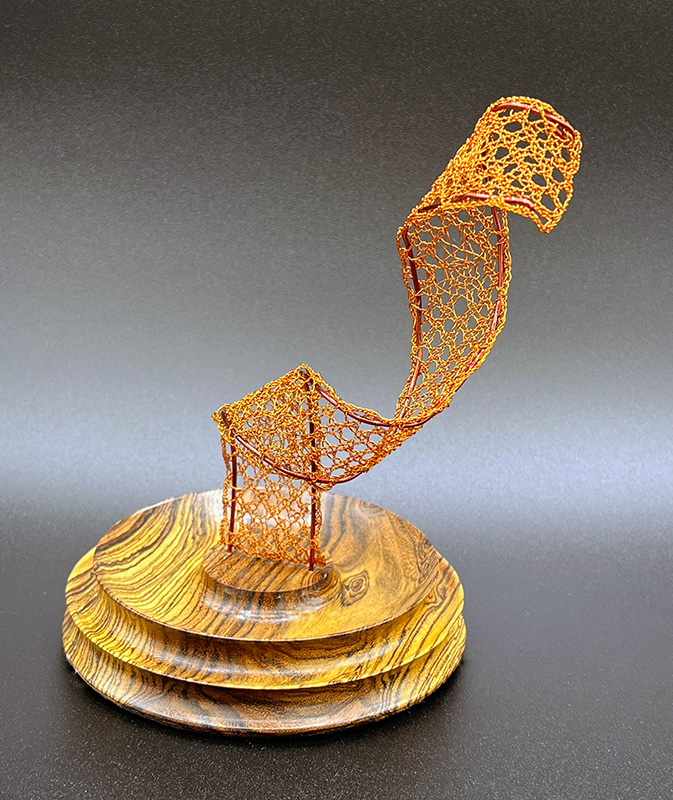
The test was successful enough that the resulting sculpture could potentially be exhibited, but for now I am happy to have this experiment displayed in my home.
You can follow my current projects and other lace experiments on Instagram and TikTok.