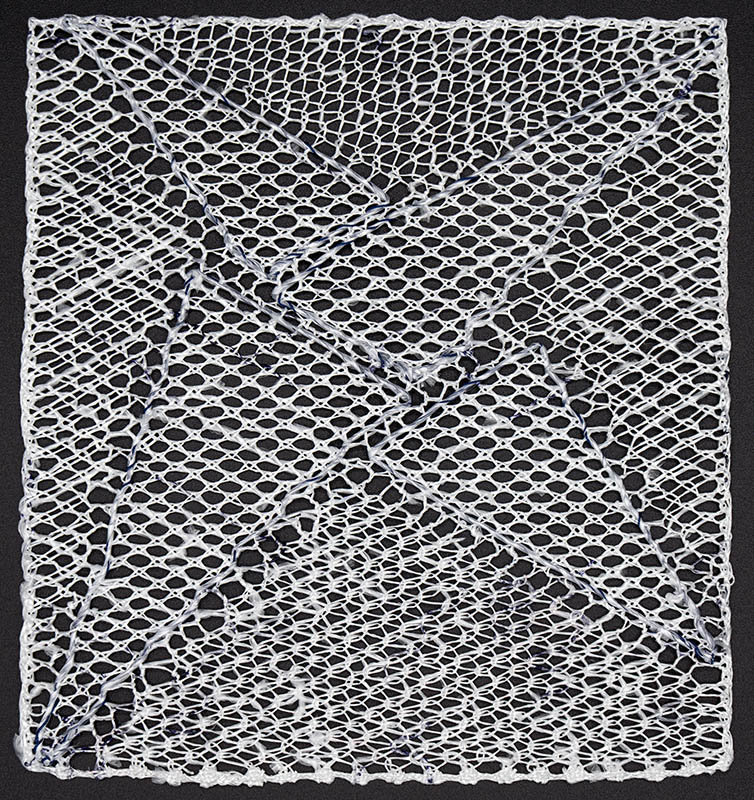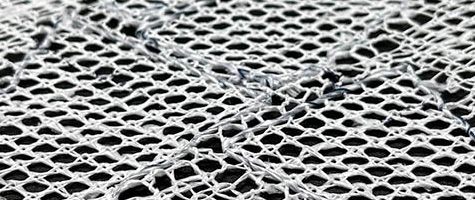
Lace is often associated with delicate threads and intricate craftsmanship, but what happens when you spin plastic into lace? New Angle of Recycling is the result of an experiment—an exploration of how recycled materials can be transformed into intricate lace while challenging traditional ideas of fiber and sustainability.
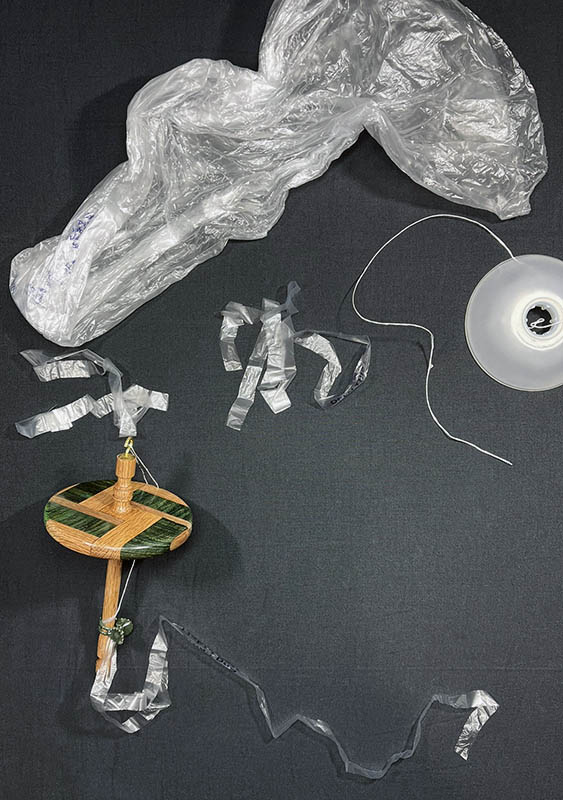
This piece started as nothing more than produce bags from the grocery store, but through the process of spinning with a drop spindle and weaving with bobbins, it became something entirely new—a geometric lacework.
Finding a New Angle: The Name & Concept
The name New Angle of Recycling is a play on words—a reference to both the triangular shapes within the lace and the reuse of produce bags as a fiber. This project was a complete experiment, born from my desire to work with finer plastic threads than past lace projects. Previously, I cut plastic grocery bags into strips and used them as they were. This time, I wanted to push the material further, spinning it into a delicate fiber suitable for intricate bobbin lace.
Learning to Spin Plastic: An Unexpected Challenge
Since produce bags are thin and fragile, I knew that cutting them into strips wouldn’t be enough. Making the plastic sturdier by spinning it into thread, meant learning how to use a drop spindle.
I started practicing with wool, a traditional fiber, but quickly moved on to the plastic. The spinning process itself wasn’t difficult, but handling the plastic strips was another story. The material clung to everything (my hands, my clothes, itself) making it frustrating to control. I tried placing dryer sheets with the strips to reduce static, but it didn’t help.
Then, a spinning/weaving friend, Cherie, suggested wetting the plastic before spinning, and it was a game-changer! Dampening the strips made them easier to grip and control.
Setting the Twist: Heat vs. Steam
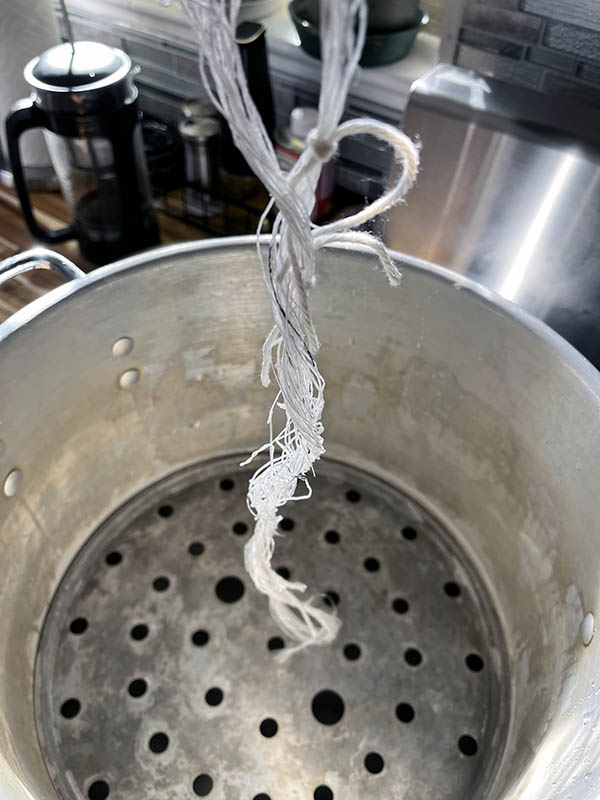
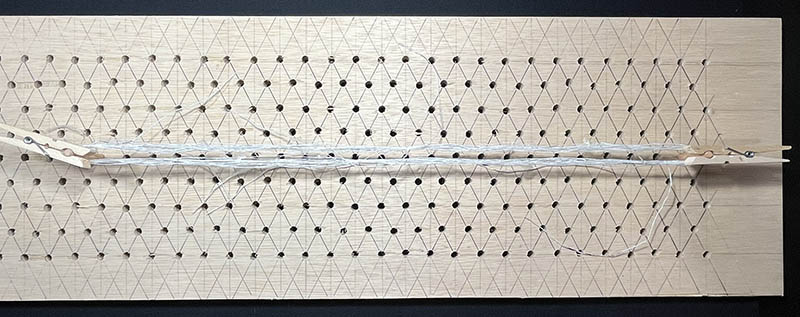
In traditional fiber spinning, steaming the thread sets the twist by relaxing/opening the fibers. I wasn’t sure if this would work with plastic, or if moisture would get trapped in-between the plastic.
I first attempted to set the twist with a blow dryer, and while it helped, it wasn’t quite enough. Ultimately, steaming the thread worked best, relaxing the fiber enough for lace making.
Weaving with Plastic: Strength & Challenges
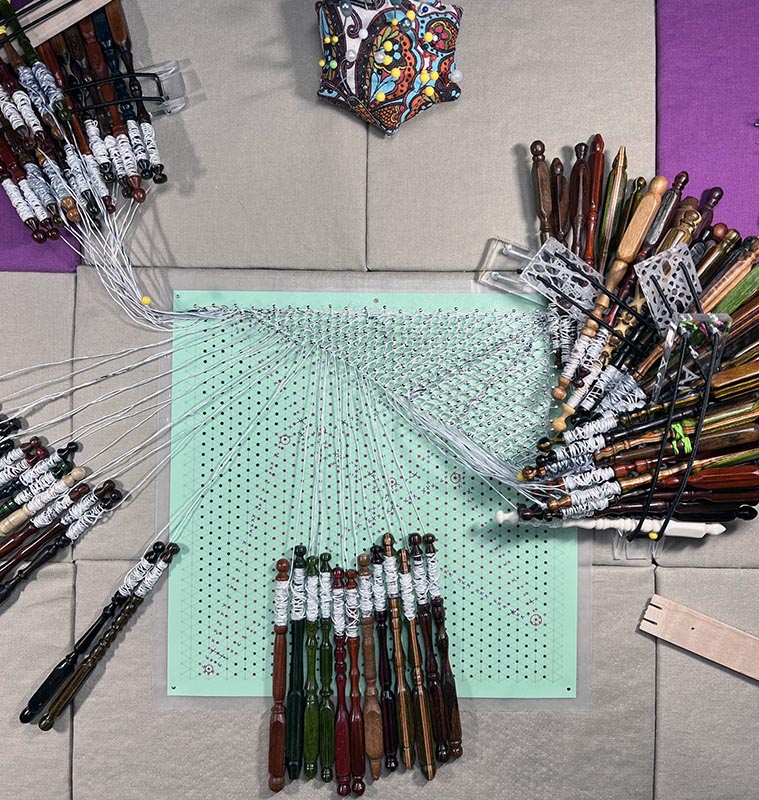
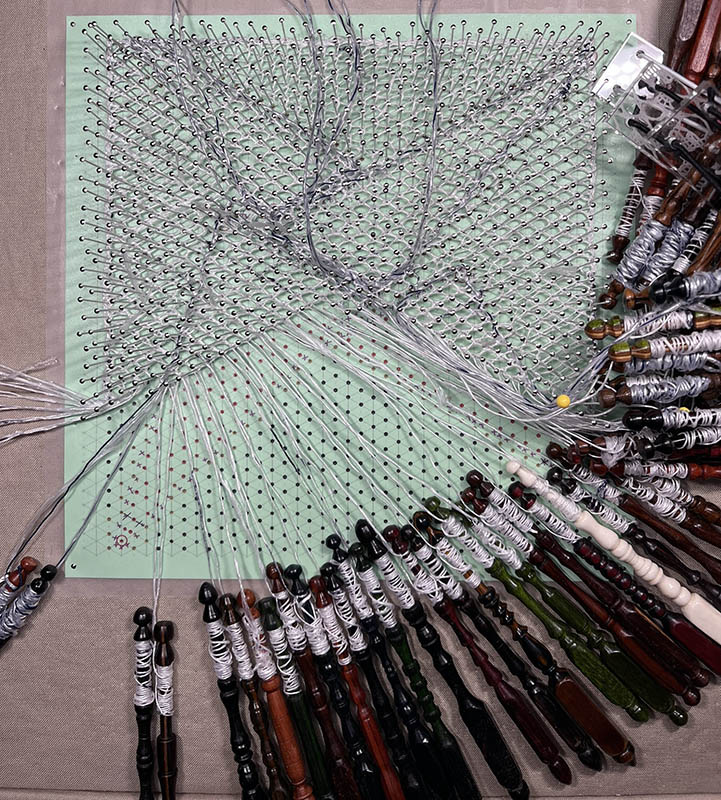
Once the plastic thread was ready, I put it to the test in bobbin lace and quickly realized that it was far more fragile than expected. Even though I spun multiple strips together for added strength, the thread was still prone to stretching under tension. If I pulled too hard, the plastic would thin out and lose its structure.
The most challenging part of the process was finding the right balance between tensioning the lace properly while ensuring the spun plastic held its shape. If I use produce bags for lace in the future, I’ll need to find a way to reinforce the thread for durability.
Adding the Gimp: Aesthetic Contrast
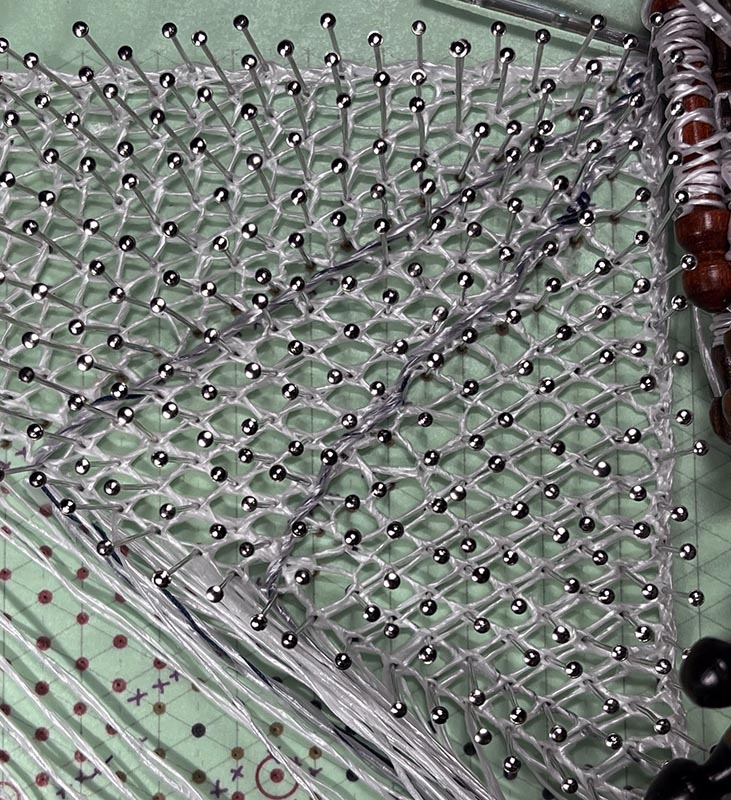
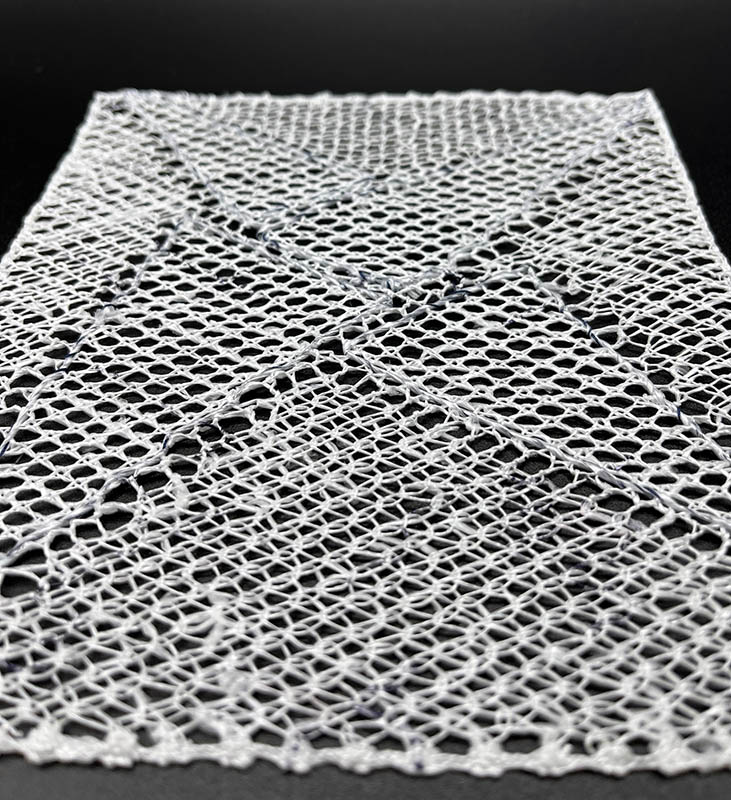
One of the defining features of New Angle of Recycling is the bold triangular outlines, which were created using a gimp thread spun from blue cotton and plastic bags. The cotton didn’t add much strength, but it did create a beautiful contrast, helping define the geometric structure within the lace.
The blue thread was chosen specifically to match the text printed on the produce bags, creating a subtle gradient effect throughout the piece.
The Finished Piece: Texture & Imperfections
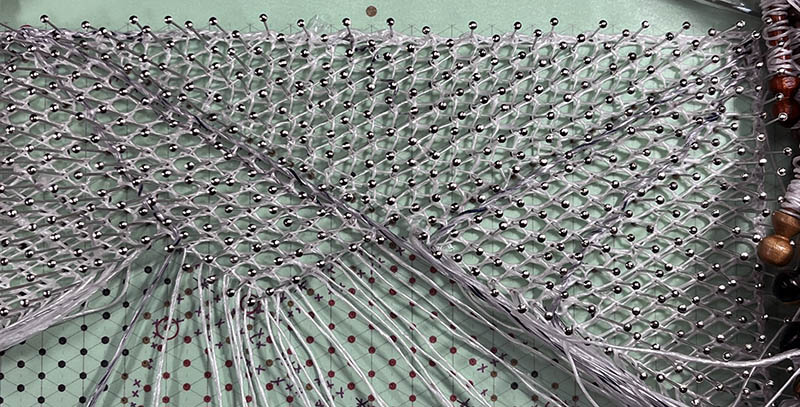
Looking at the finished lace, you can see small bits of unspun plastic ends sticking out here and there, a reminder of the material’s original form. Rather than detracting from the design, I think these imperfections highlight the nature of the fiber, reinforcing the idea that lace can be made from the most unexpected materials.
Redefining Lace: The Art of Unconventional Materials
I hope New Angle of Recycling expands the perception of what lace can be. Lace is often thought of as delicate, decorative, and traditional, but it can also be bold, substantial, and innovative.
Follow Along for More Lace Experiments!
I love pushing the limits of what lace can be, and I have even more unconventional projects in the works! If you’d like to follow my process and see how I turn everyday materials into fiber art, follow me on Instagram (@BobbinLaceNet) and TikTok (@CajahYupMe).