Several years ago, during a tour of the Molly Brown House Museum in Denver, I noticed a lace pillow tucked among the historic displays. It immediately caught my attention—not only because it was an interesting bobbin lace pillow, but because the lace on it was in disarray. The bobbins were tangled, threads had broken, and it looked like someone might have knocked the lace over. At the time, I was still early in my lace-making journey and couldn’t offer help. But the memory of that pillow stayed with me.
Recently, I took another tour of the museum with a goal in mind: to find the lace pillow again. When I did, it was just as I remembered, still tangled, still waiting for attention. I reached out to the staff who care for the collection and offered to restore the lace. To my delight, they were enthusiastic about the idea and genuinely passionate about preserving the museum’s historic objects.
A Bit of History: The Princess Lace Loom
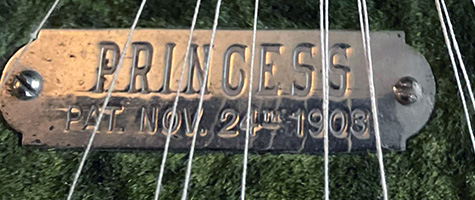
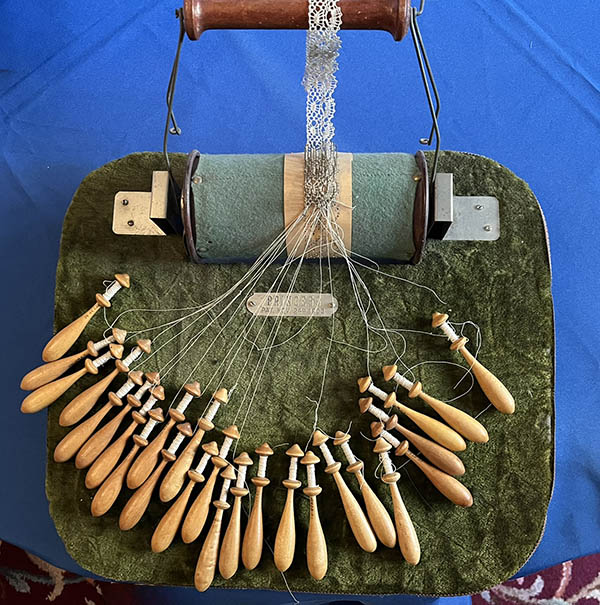
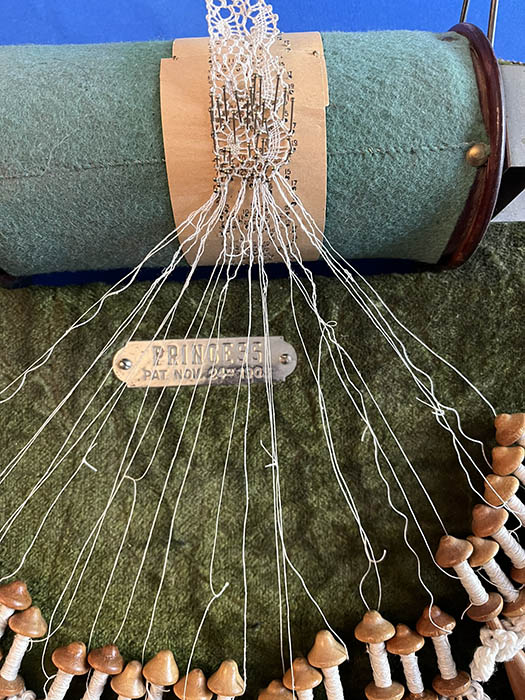
The Princess Lace Loom was patented in 1903 by Sylvester G. Lewis. I believe the Molly Brown House Museum’s pillow is an original model, likely donated many years ago by a member of the Rocky Mountain Lace Guild. The silver plate on top reads “Princess” and includes the patent date. This is an exciting detail to find intact after all these years.
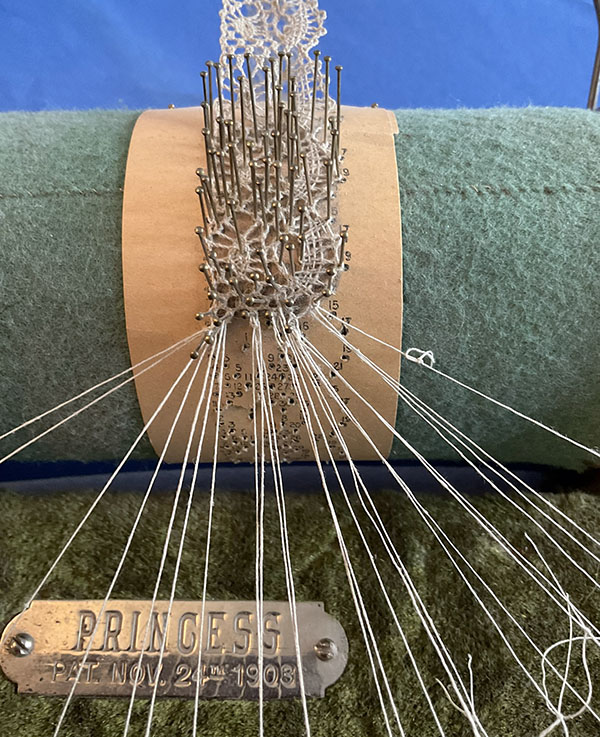
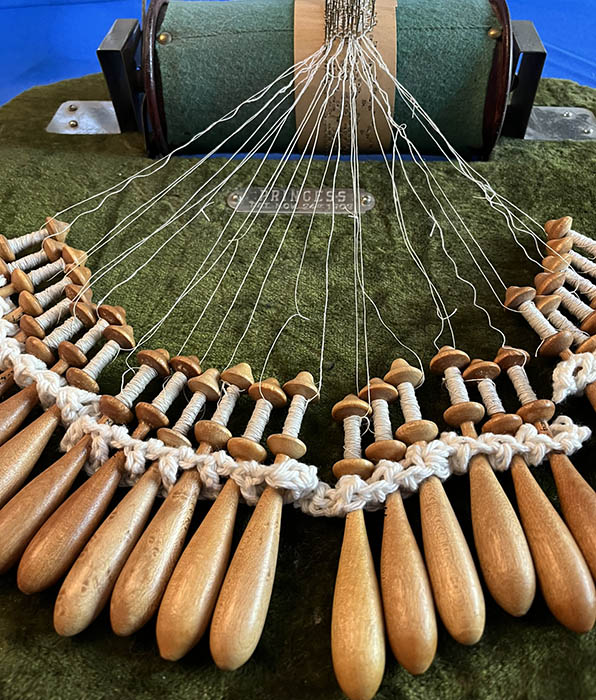
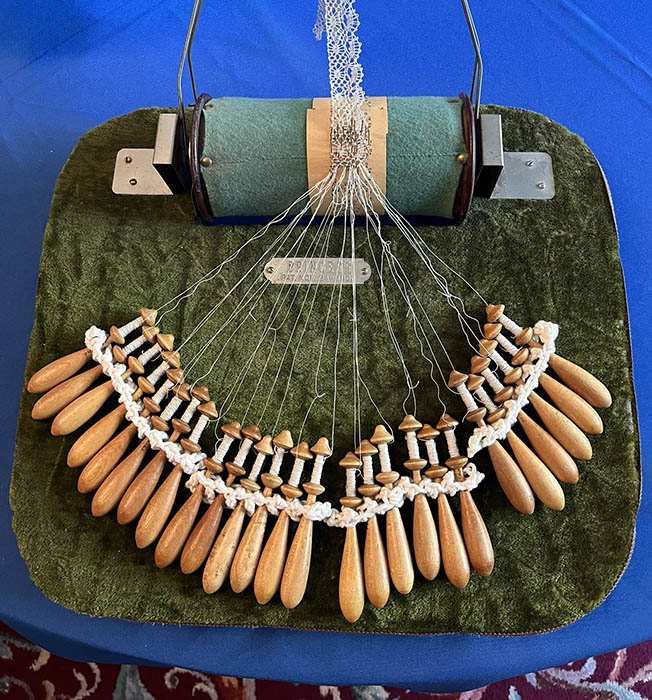
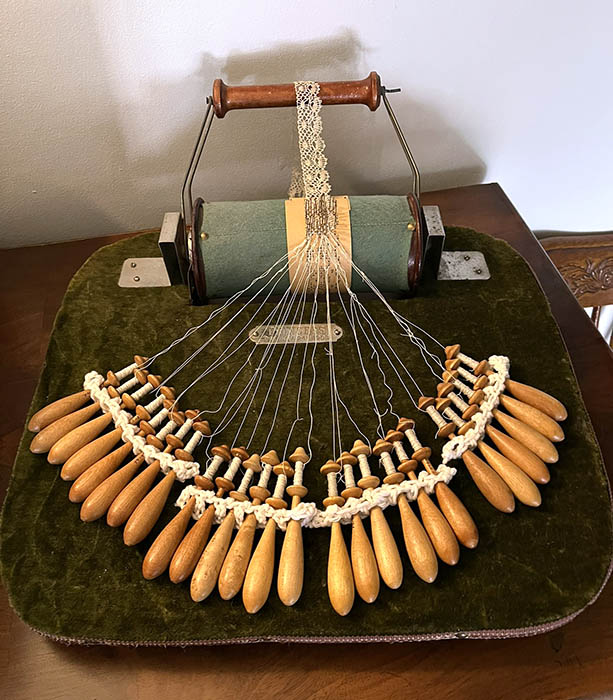
This pillow is a roller-style bobbin lace pillow used to make torchon lace patterns. Unlike most lace pillows, you can only pin the roller portion. The rest of the pillow is made of wood and covered in green velvet. This means there’s no way to separate bobbins with a pin on the flat surface.
Here is an excellent article about the Princess Lace Loom, written by fellow Brooklyn Lace Guild member, Karen Thompson.
The Lace and Its Condition
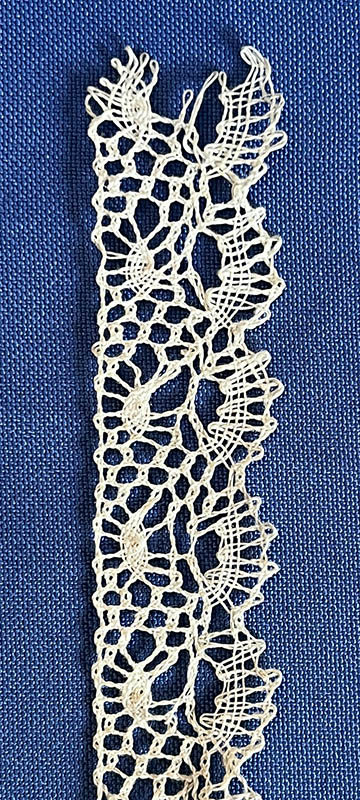
The lace itself is a classic torchon pattern, which I matched to one of the original instruction booklets distributed with the Princess Lace Loom in the early 1900s. The pillow has 26 bobbins, though when I first examined it, not all were attached to threads. Most threads were broken or hopelessly tangled.
Dust had collected on the lace still on the roller part. Lace in the process of being worked is nearly impossible to clean because of all the pins. I used a can of compressed air to gently remove the dust. It is a wonder what a little air can do.
Untangling the Threads
Restoring this lace meant reversing the lace making process. I began by carefully untangling the threads, separating each strand from its neighbors. Since the bobbins are identical, it didn’t matter which bobbin went with the threads, just that each thread had a bobbin. Once the threads were free, I used a weaver’s knot to reattach them to the bobbins, taking care to keep the joins as small and neat as possible.
After everything was reattached, I realized several threads were still missing. To locate the breaks, I unlaced one full repeat of the pattern. This meant working the stitches backward by undoing crosses and twists, pin by pin. It was slow work, but incredibly satisfying to see the lace gradually come back into order.
Securing the Bobbins
Once the lace was repaired, I used crocheted bobbin holders to keep everything in place. Each holder is made of simple double-crochet, creating holes just large enough for the bobbins to slip through. These will remain on the pillow permanently, so the bobbins stay organized and secure during display. It’s a small addition, but one that ensures the lace will stay safe from future tangling, if the pillow is ever moved or jostled.
The Challenge of Linen and Colorado’s Climate
The threads on this pillow are linen, which was originally used to stay historically accurate. However, linen and Colorado’s dry climate don’t always agree. Over time, the dryness makes the fiber brittle and prone to breaking. It’s a reminder of how much environment influences the preservation of textiles, and why care must be taken when working with antique lace in this region.
A Unique Experience
My favorite moment in the entire process was simply getting to use the Princess Lace Loom pillow. I can easily say I’ve never worked on a bobbin lace pillow quite like it. It was a genuine thrill to interact with a piece of lace making history.
Restoring someone else’s lace is very different from creating my own. My personal work often pushes boundaries with unconventional materials, but this project required restraint and respect for tradition. My goal wasn’t to reinvent the lace, but to honor and restore it as faithfully as possible.
Preserving the Past, One Thread at a Time
Bringing the Princess Lace Loom pillow back to order felt like bridging the past and present, connecting my modern explorations of lace with historical roots. It’s a reminder that every lace maker, whether from 1903 or today, shares the same careful movement of threads, tension, and patience.
I’m deeply grateful to the team at the Molly Brown House Museum for trusting me with such a special piece of lace history.
Follow Along for More Lace Experiments
Want to see behind-the-scenes progress from projects like this? Check out my Instagram (@BobbinLaceNet) and TikTok (@CajahYupMe) for process videos, restoration updates, and new lace experiments that blend history, technique, and innovation.